


Best Christmas Light Colors 2025: Top 8 Color Themes for Cozy Indoor Decorating
You don’t need a huge house or a professional designer to make your space feel magical for the holidays. What you really need is the right Christmas light color theme. The best Christmas light colours can make a tiny dorm room feel like a warm cabin, turn a minimalist living room into a winter gallery, or give your bedroom that soft, sleepy glow you never want to turn off.
In this guide, you’ll learn how different Christmas light color combinations change the mood of a room, which types of lights make the most sense for small spaces, and eight color themes you can copy or mix-and-match. We’ll also cover safety, energy use, and practical decorating tips, so your display looks good, feels cozy, and stays safe.
Why Christmas Light Colors Matter
Color is not just “aesthetic” — it directly affects how you feel in a room. Research on colour psychology shows that warm tones like red, orange, and yellow often feel comforting and energising, while cooler tones like blue and green feel calm, clear, or sometimes even a bit distant. When you’re choosing the best Christmas light colors, you’re really choosing how you want your winter to feel.
Light temperature matters too. Warm white lighting around 2700–3000K is widely recommended when you want a cosy, relaxing vibe, while cooler white around 4000K+ feels cleaner and more alert. So if you’re trying to create a chill study zone with fairy lights, you’ll make a different choice than if you’re decorating a movie-night living room.
There’s also a practical side. Modern LED Christmas light strings use around 75% less energy and last many times longer than old-school incandescent bulbs, meaning you can enjoy more lights for less money and less environmental impact. That makes it easier to experiment with bolder Christmas light color combinations without stressing over power usage.
When to Use Each Christmas Light Colors Indoors
To keep things simple, think of light colors in three groups: warm light, cool light, and multi-color or accent color.
- Warm white and warm colours (gold, red, amber) – Perfect when you want a snug, hygge-style space. Great for bedrooms, lounge areas, and reading corners.
- Cool white and icy tones (blue, silver) – Work well in minimalist spaces, kitchens, or study zones where you want a fresher, cleaner feel.
- Multi-color, jewel tones, or retro brights – Best for social spaces and parties where energy, fun, and nostalgia matter more than calm.
Later in the guide, we’ll go through eight specific color themes and exactly where each Christmas light color theme works best indoors.
Types of Christmas Lights: Pros, Cons, and Best Options for Dorm Rooms
Before you pick colors, you need the right type of light. Not every string works well in a small bedroom or dorm. Some get too hot, some are hard to hang, and some just eat power for no good reason.
| Type of Light | Pros | Cons | Best Indoor Use |
|---|---|---|---|
| LED string lights | Use ~75% less energy than incandescent; stay cool to the touch; long lifespan. | Higher upfront cost; ultra-bright cool white can feel harsh if you choose the wrong colour temperature. | Main tree, around windows, room perimeter, dorm walls. |
| Micro / fairy copper-wire lights | Very flexible; almost invisible wire; perfect for jars, shelves, and headboards. | Usually more delicate; battery packs need replacing or recharging. | Bed frames, bookshelves, table decor, photo walls. |
| Traditional incandescent mini-lights | Classic glow people associate with “old-school” Christmas. | Use more energy; get hotter; more fire risk; being phased out in many markets. | Only if you already own them and they’re in good condition; avoid crowded or fabric-heavy areas. |
| Smart / colour-changing LEDs | Colour and effects controlled via app; can shift between multiple themes without buying more lights. | More expensive; needs Wi-Fi or Bluetooth; you must avoid mixing unsafe older sets with new ones on the same circuit. | Techy dorms, gaming setups, renters who want multiple looks with one set. |
Source: Compiled from energy and lighting guidance on LED efficiency and lamp costs.
Whatever style you choose, always make sure indoor lights are labelled for indoor use and tested by an independent safety body, and check cords for damage before you hang them.
Read More: How to Decorate With Christmas Lights Indoors: 9 Ways for Your Dormitory (2025 Guide)
Top 8 Christmas Light Color Themes for 2025
Here are eight colour themes you can use as-is or remix into your own Christmas light color combinations. Think of them as “recipes” for mood: cosy, minimalist, dreamy, earthy, luxurious, retro, glamorous, and icy-calm.
1. Classic Warm White Glow
If you’re not sure where to start, choose this. Warm white around 2700–3000K is the fastest way to get a soft, home-like glow that flatters skin, makes blankets look extra inviting, and calms your brain after a long day. It’s the most universal answer to “what’s the best Christmas light colors for a cosy indoor vibe?”
Use warm white LED Christmas light strings around your bed frame, across the top of your wardrobe, or zig-zagged across the ceiling. Layer them with candles (real or LED), beige or cream textiles, and warm wood tones to double down on that cabin feel.
2. Cool White + Silver: Minimalist Winter Theme
If your style is more crisp and minimal, cool white plus silver metal or mirror finishes will speak to you. Cool white LEDs above 4000K feel bright and clean, which suits tidy desks, monochrome bedding, and sleek furniture.
Try wrapping cool white lights around a simple artificial tree with only silver ornaments, or drape them along a bookshelf with chrome picture frames and clear glass. This theme suits people who love that “snowy gallery” aesthetic more than the classic red-and-green look.
3. Pastel Christmas Theme: Soft Pink, Baby Blue, Mint
Pastel lights and decorations turn Christmas into something softer and more dreamy. Think milkshake colours: pink, blue, mint, lilac. You can get pastel-tinted bulbs, RGB smart LEDs set to low-saturation hues, or keep the lights warm white and use pastel ribbons, baubles, and paper stars around them.
This Christmas light color theme is perfect for dorm rooms, creative studios, and bedrooms. Combine fairy lights in warm white with pastel paper garlands, soft blankets, and maybe a few plush toys. It feels festive without being loud, and it photographs beautifully.
4. Earthy Tones: Olive, Brown, Terracotta, Neutral Whites
Earthy Christmas styling is a big trend for people who want something calmer and more sustainable-feeling. Instead of bright red and green, you use olive, deep green, terracotta, linen, and beige. Light-wise, warm white and very soft gold are your best friends.
Hang warm white LED Christmas lights across simple jute or cotton bunting, use brown paper for gift wrap, and decorate with pinecones, dried oranges, or wooden ornaments. This is a great option if you love plants, neutral interiors, or a slightly boho feel.
5. Jewel Tones: Emerald, Ruby, Sapphire
Jewel tones are your go-to when you want drama, depth, and the feeling of “fancy Christmas” even in a small space. Deep emerald, ruby red, sapphire blue, and amethyst purple work especially well against dark walls or rich wood.
Use warm white or neutral white lights as the base, then layer jewel-tone baubles, ribbons, and cushion covers. You can also use smart bulbs set to deep, saturated hues as accent lighting around warm white string lights for a boutique-hotel bar vibe.
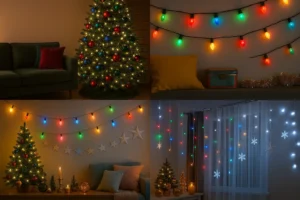
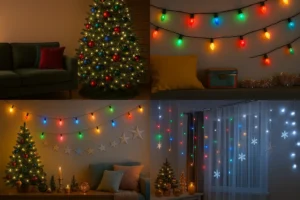
6. Multi-Color Retro Lights (90s & Vintage Comeback)
Multi-color retro lights are nostalgic, loud, and unapologetically fun. They’re ideal if you want your room to feel like a party the moment you flick the switch. Think chunky coloured bulbs or multi-colour mini-lights draped over everything.
Use these in social spaces: living rooms, shared dorm kitchens, games areas. Keep the rest of the decor simple so it doesn’t feel too chaotic — maybe solid-colour cushions, a couple of retro tins, and a classic tinsel garland. If you’re using older incandescent multi-colour sets, make sure they’re still in good condition and not mixed with newer sets in ways that overload your outlets.
7. Gold + Warm White Mix
This theme is like a filter that makes everything look more expensive. Warm white lights plus gold or champagne ornaments add just enough shine without going full glitter explosion. It works nicely in adults’ spaces, formal living rooms, or anywhere you entertain.
Try layering one set of warm white string lights with another set of micro-gold fairy lights for extra sparkle. Add metallic candle holders, warm-toned glassware, and a touch of velvet or satin fabric to keep it glamorous but still cosy.
8. Blue & White Icicle Theme
Blue and white is the mood for people who love the idea of quiet snow, clear winter skies, and a calmer kind of festive season. Blue is often associated with calm and stability in colour psychology, while white keeps things feeling fresh and clean.
Use blue and white LED icicle lights along a curtain rail or window, or drape them across shelving with glass, acrylic, and silver decor. Add a few snowflake ornaments or paper stars for a full “inside the snow globe” vibe.
How to Choose the Right Christmas Light Color for Your Home
Instead of guessing, walk through these four steps. They’ll help you pick the best Christmas light colors for each room, not just for the whole house or dorm.
Consider Your Interior Color Palette
Look at your walls, flooring, bedding, and biggest pieces of furniture. Are they mostly warm (beige, tan, warm wood) or cool (grey, white, black, blue)? Matching warm light with warm interiors and cool light with cool interiors usually feels more harmonious.
| Existing Room Palette | Recommended Light Base | Suggested Theme |
|---|---|---|
| Beige, tan, cream, warm wood | Warm white LED (2700–3000K) | Classic Warm White, Gold + Warm White, Earthy Tones |
| White, grey, black, pale blue | Neutral or cool white LED (3000–4000K+) | Cool White + Silver, Blue & White Icicle |
| Bold colours, posters, mixed patterns | Warm white or colour-changing LEDs | Pastel Christmas, Multi-Color Retro, Jewel Tones |
Source: Colour temperature guidance adapted from lighting design resources.
Match Light Temperature to Room Mood
Ask yourself: “What do I actually do in this room most of the time?” Then choose light temperature that supports that purpose:
- Relaxing, sleeping, watching shows – Warm white lights around 2700–3000K help create a restful atmosphere.
- Studying, working, crafting – Neutral to slightly cool white (3000–4000K) keeps you more alert without going too clinical.
- Socialising and parties – Mix warm white with accents of colour (multi-color strings or RGB smart lights) to add energy and playfulness.
Decide Between Aesthetic vs. Traditional Style
Some people want their lights to match Instagram aesthetics; others want childhood nostalgia. Decide which is more important for you this year.
- If you lean aesthetic, choose one or two key colours and repeat them: e.g., warm white + gold, or cool white + silver.
- If you lean traditional, lean harder into multi-colour, red and green, or classic warm white mini-lights with lots of ornaments.
Remember: the best Christmas light colors are the ones you actually enjoy looking at every night, not just the ones that look good in a quick photo.
Mix-and-Match Color Themes Safely
You can absolutely mix themes as long as the colours don’t fight. For example, keep your main tree in Classic Warm White Glow and use Blue & White Icicle in your study nook. Or pair Earthy Tones in your lounge with a small Pastel Christmas tree in your room.
However, mixing lights has to be safe. Safety agencies recommend using only lights tested by an independent lab, not overloading sockets, and following the “no more than three strings connected end-to-end” rule unless the manufacturer clearly allows more. Avoid daisy-chaining old incandescent strings with modern LED sets, and always unplug lights when you’re leaving or going to sleep.
Read More: Top 8 Most Instagrammable Places at Local Halloween Events in Australia (2025)
Indoor Decorating Tips for Christmas Light Colors
Once you’ve locked in your colour theme, the way you place your lights will decide whether your space feels polished or chaotic. Here are practical ways to use your chosen Christmas light color combinations indoors.
- Layer your lighting – Combine overhead room lights on a dimmer (or warm lamps) with your Christmas lights. That way you can shift from “study” to “cozy” without turning everything off.
- Use lights to frame zones – Wrap warm white LEDs around your bed frame for a sleep zone, and hang cool white fairy lights around your desk for a focus zone.
- Decorate vertical lines – In small rooms, running lights up around a window frame, door, or closet makes the space feel taller.
- Hide cords smartly – Use removable hooks and cable clips rather than tape or nails that can damage cords or walls.
- Timer everything – Plug lights into timers or smart plugs so they switch off automatically late at night, saving energy and reducing risk.
For dorms or rentals, micro fairy lights and battery-powered LEDs are especially useful. They’re light, easy to move, and don’t demand extra outlets, which is helpful in older buildings or shared spaces.
FAQ: Common Questions About Christmas Light Colors
1. What Christmas light color is best for a cozy indoor vibe?
If your goal is pure cosiness, warm white lights around 2700–3000K are usually the best choice. They mimic the gentle glow of traditional lamps and candles, which research links with feelings of comfort and relaxation. You can layer warm white LED Christmas light strings with soft textiles and candles (or flameless candles) to make even a small room feel like a snug retreat.
2. Is warm white or cool white better for indoor Christmas decorating?
Neither is universally “better” — it depends on the mood and your space. Warm white is ideal for bedrooms, lounges, and anywhere you unwind because it softens shadows and feels more intimate. Cool white works better in modern, minimalist interiors or study zones where you want a clean, crisp look. Lighting experts typically recommend warm white for most home settings and cool white for more functional or contemporary spaces.
3. What colors fit a pastel Christmas theme?
A pastel Christmas theme usually includes soft pink, baby blue, mint green, lilac, and creamy off-whites. The lights themselves can be warm white or low-brightness RGB LEDs set to pastel shades. Keep the metals light (rose gold, soft gold, or white metal), and repeat the same 2–3 pastel colours across ornaments, cushions, and wrapping paper. That repetition keeps the theme intentional instead of random.
4. How do I decorate with earthy tone Christmas lights?
For earthy tones, start with warm white or very soft gold LEDs as your base, then add olive, terracotta, brown, and cream in your decorations. Use natural materials like wood, jute, linen, dried fruit, and pinecones. You can wrap warm lights around a simple branch arrangement in a vase, hang them alongside macramé hangers, or weave them through garlands of eucalyptus or faux greenery. The key is to avoid high-shine metallics and neon colours so the palette stays grounded.
5. Can I mix multiple light color themes in the same room?
Yes, as long as you choose a clear “main” theme and treat the others as accents. For example, your main seating area could use Classic Warm White Glow, while your window gets a subtle Blue & White Icicle treatment. Avoid mixing too many different white temperatures in one line of sight (e.g., warm white and very cool white next to each other), because that can look patchy and unintentional. Also, follow safety advice: don’t overload sockets, keep damaged sets out of use, and stick to manufacturer guidance on how many strings you can connect.
6. What Christmas light colors are trending in 2025?
Current indoor trends lean toward three directions: earthy neutrals with warm white lights (for a calm, sustainable look), minimalist cool white + silver (for very clean, gallery-like spaces), and retro multi-color LEDs (for a playful, nostalgic feel). Jewel tones are also popular for people who want a richer, more luxurious mood without going full rainbow. The good news is that most of these looks are easy to achieve with a few well-chosen LED Christmas light sets and some consistent colour choices.
Conclusion
When you zoom out, choosing the best Christmas light colors isn’t about following a single trend — it’s about supporting the way you actually live and feel in your space. Warm whites and golds make small rooms feel like safe little nests. Cool whites and silvers sharpen up modern interiors. Pastels, jewel tones, earthy palettes, and multi-color retro lights all offer different emotional “flavours” you can swap in depending on what you want from the season.
If you remember three things, let them be these: pick light temperatures that match your room’s mood, keep to a simple and consistent colour story, and lean on efficient, safe LED Christmas light options so you can enjoy your display longer with less worry. Do that, and whatever combination you choose will feel intentional, cosy, and perfectly you.
References
EnergyAustralia. (n.d.). Light and easy: Tips to keep your Christmas bling in budget.
Revolve LED. (2024, December 19). 2700K vs 3000K vs 4000K vs 5000K: Color temperature comparison

Hi, I’m Natalia, a passionate education advisor committed to helping students pursue their dreams through international study. Growing up in a small town and later attending a prestigious university, I’ve seen firsthand how transformative education can be. I created this platform to support families and students on their journey to studying in Australia, offering practical guidance, strategic planning, and inspiration. My mission is simple: to make quality education accessible, joyful, and empowering for every learner.