


How to Decorate With Christmas Lights Indoors: 9 Ways for Your Dormitory (2025 Guide)
You don’t need a massive budget or a Pinterest-perfect apartment to make your dorm feel festive. With a few smart Christmas lighting ideas, you can turn a plain boxy room into a cosy holiday nook that’s still safe, practical, and (most importantly) allowed under typical dorm rules. In this guide, you’ll learn exactly how to decorate with Christmas lights indoors, how to work around limited outlets, what types of lights to buy, and how to hang lights in your room without wrecking the walls or annoying the RA.

Why Dorm Room Christmas Lights Are a Must
Most dorms start out the same: off-white walls, basic furniture, harsh ceiling light, and maybe one tiny window if you’re lucky. Adding Christmas lights instantly changes that energy. Soft, warm string lights make late-night study sessions less depressing, give you a chill background glow for gaming or movie nights, and make your half of the room feel like “you” instead of a generic bedroom.
Lighting also affects your mood and focus. Warmer, dimmer light in the evening can help you wind down compared with bright overhead lighting. A simple string of fairy lights around your bed or desk gives just enough light to move around without waking a sleeping roommate. Battery-powered LED fairy lights and low-voltage plug-in lights are especially popular because they stay cool and use very little power when used properly.
On top of that, festive string lights are one of the easiest ways to decorate on a student budget. A couple of affordable strands and clever placement will do far more for your room than a pile of random impulse decor.
Dorm Safety Rules: What You Need to Know Before Hanging Christmas Lights
Before you even think about how to hang lights in your room, you need to know what’s actually allowed. University housing policies can be surprisingly strict. Many campuses:
- Limit how many strands of string lights you can use.
- Require that lights are LED and certified to certain safety standards (like UL-listed products in some regions).
- Ban traditional extension cords but allow surge-protected power strips.
- Restrict how much of a wall or door can be covered with decorations (e.g. no more than around 20% in some residence guides).
- Prohibit adhesive string lights or anything that leaves residue on walls in certain halls.
Some dorm room guides also say you cannot plug multiple strands into each other (“daisy-chaining”) and cap the number of bulbs per room. One housing guide, for example, limits string lights to a certain bulb count and bans wrapping them around handrails or guardrails.
So, before buying anything:
- Check your housing handbook or residence life website.
- Look specifically for sections on electrical safety, string lights, and decorations.
- Screenshot or bookmark the relevant rules so you can double-check later.
Finally, always inspect your lights. Electrical safety authorities recommend checking for frayed cords, cracked insulation, missing bulbs, and damaged plugs before switching any lights on.
9 Creative Ways to Decorate Your Dorm Room With Christmas Lights
Now for the fun part: real-life, dorm-friendly ways to use your lights. These nine ideas focus on low-heat LED strands, fairy lights, and mini projectors so you stay within typical rules and keep your room safe.
1. Create a Cozy Bed Canopy with String Christmas Lights
If you want your bed to feel like a winter hideout, a canopy of soft lights is the way to go. Instead of nailing anything into the wall or ceiling, use removable adhesive hooks or clips along the ceiling line and headboard area, then drape a strand of warm white fairy lights in soft swoops above your bed.
To keep it safe and dorm-friendly:
- Use cool-touch LED fairy lights, not older incandescent strings that can get hot.
- Don’t bury the lights in thick blankets or pillows; keep them visible and free of heavy fabric.
- Consider battery-powered strands with a built-in timer so they switch off automatically.

2. Outline Your Desk or Study Nook with Christmas Lights
That tiny desk is where you’ll spend countless hours studying, eating, procrastinating, and video calling home. A simple outline of lights can define the space and make it feel more inviting.
Try this:
- Run a short strand of LED lights along the outer edge of your desk or on the wall around your study nook.
- Use clear cable clips or removable hooks instead of tape so nothing peels off paint.
- Choose a softer, warm white glow rather than bright, colour-changing lights if you’re easily distracted.
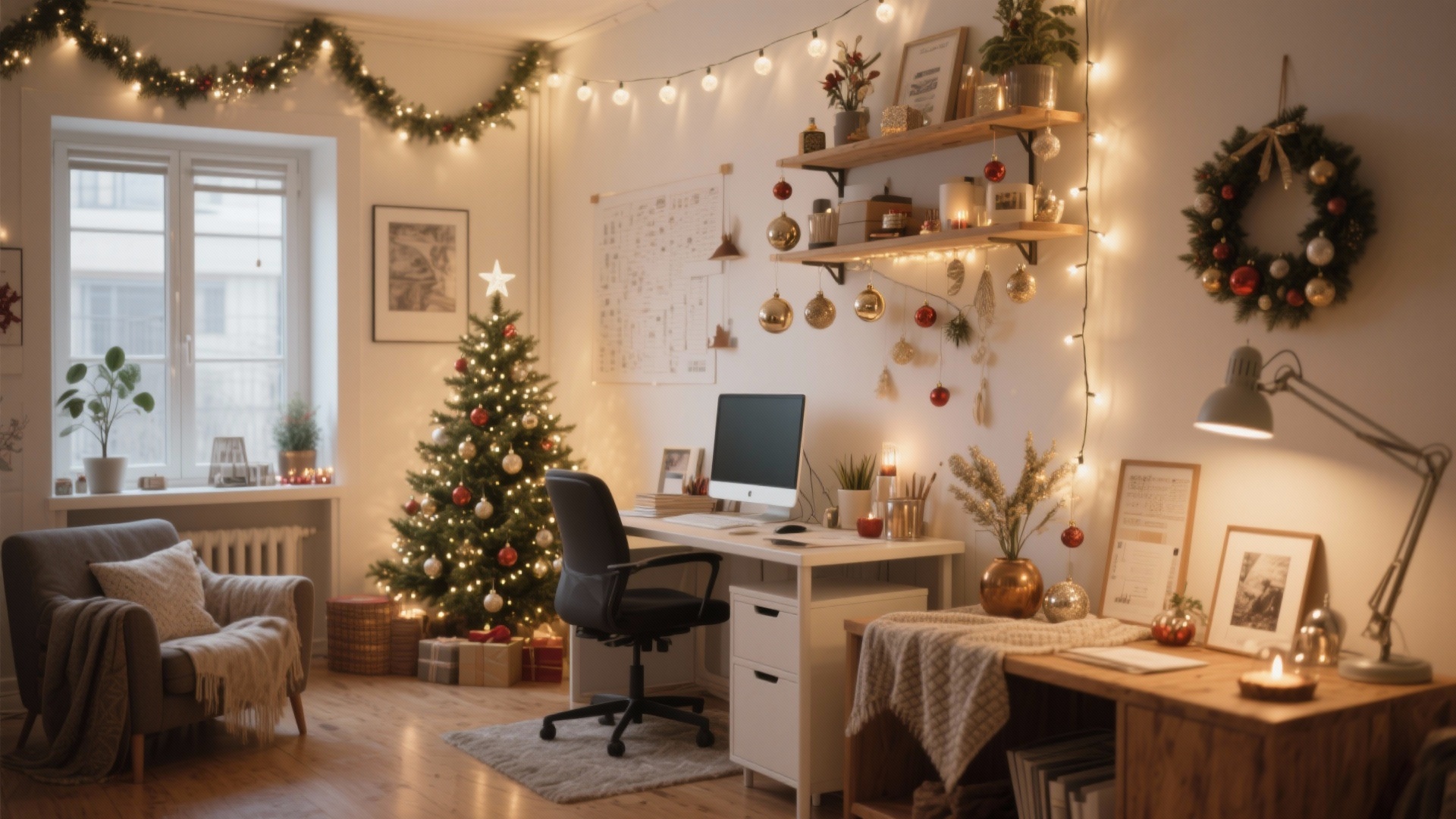
If you’re using a surge-protected power strip (where allowed), keep it off the floor and away from piles of paper, bedding, or laundry to reduce fire risk. Electrical safety guides recommend avoiding overloaded power boards or plugging too many light sets into one strip.
3. Add Christmas Lights to Your Wall Collage or Photo Grid
Many students create a gallery wall of photos, postcards, and small prints. Weaving a slim fairy light strand through that collage adds instant holiday sparkle.
Ideas:
- Hang a grid or wire memo board and snake fairy lights along the frame.
- Clip mini photos or Polaroids directly onto a light strand designed with small built-in clips.
- Keep decorations within any dorm “combustible materials” limits for wall coverage.
Some residence guidelines limit how much of a wall or door can be covered with combustible decorations such as paper posters, so keep your collage curated rather than plastering the entire wall.
4. Wrap Christmas Lights Around Dorm Bed Frames
Metal or wooden bed frames make a perfect base for subtle lighting. Wrap a short string of LED lights around the headboard or the outer railing of a lofted bed, keeping the bulbs facing outward for a soft halo effect.
Do:
- Use cable ties or soft Velcro ties to secure the lights without crushing the wires.
- Keep lights away from sharp edges to avoid damaging the insulation.
- Leave enough slack so you’re not pulling on the cord every time you sit up.
Don’t:
- Thread lights where they’ll get squashed every time you move the mattress.
- Wrap lights around bedding or stuffed toys, especially if you’re not using LED strands.
- Plug multiple high-wattage strands into each other or into a single overworked adapter.
5. Make a DIY Fairy Christmas Light Curtain
If your dorm has a blank wall or a wardrobe side that faces into the room, a vertical curtain of fairy lights can be a stunning feature without taking up any floor space.
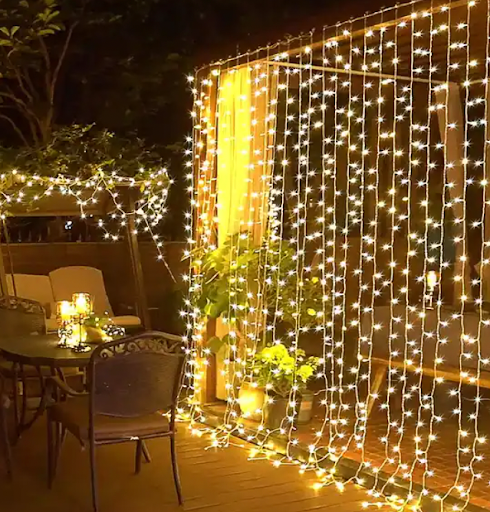
Here’s a simple way to do it:
- Place a removable hook rail or several adhesive hooks in a straight line along the top edge of the wall.
- Hang multiple vertical strands of micro-LED fairy lights or one curtain-style set.
- Let them fall loosely, keeping them flat against the wall instead of tangled.
When learning how to decorate with Christmas lights indoors, it’s tempting to hide cords behind furniture or rugs. Indoor safety advice specifically warns against running light cords under carpets or heavy furniture because heat can build up and damage the cable.
6. Decorate Bookshelves and Storage Units with Christmas Lights
Open shelving, cube storage, or even the top of your wardrobe are great places to add subtle holiday glow. Wind fairy lights around plant pots, book stacks, or storage baskets for a cosy, lived-in look.

To keep it safe and neat:
- Use LED strands that stay cool, especially if they’re near books, paper, or fabric.
- Avoid wrapping lights tightly around real plants; experts note that older, warmer bulbs can scorch foliage if they rest directly on leaves.
- Keep battery packs accessible so you can switch them off easily.
7. Add Christmas Lights Around Mirrors for a Soft Glow
Got a full-length mirror on the back of the door or a small vanity mirror on your desk? Bordering it with lights gives you flattering, indirect illumination for getting ready without blinding your roommate.
Mirror-lighting tips:
- Use a short, low-voltage strand around the frame.
- Secure with clear adhesive clips rather than tape or glue.
- Never run the cord where it will get trapped in a door hinge.
If your mirror lives on the back of a door, be extra careful not to run any string lights over the top or around the edges in a way that could pinch the wires when the door opens and closes, as pinched cables can become fire hazards over time.
8. Hang Christmas Lights Inside Clear Jars or Bottles for Accent Lighting
One of the easiest Christmas lighting ideas for small dorms is the “jar of lights” trick. Just coil a short battery-operated fairy light strand into a clear jar, bottle, or lantern-style container and place it on your desk or bedside table.

Why it works so well in dorms:
- Battery-operated LEDs produce very little heat when used correctly and are widely recommended as a safer option for decorative lighting.
- No need to reach a wall outlet, which is handy if your desk is already overloaded.
- You can easily move the jar to wherever you’re hanging out.
Just remember that batteries themselves can overheat or leak if damaged or left in poor-quality devices, so always follow manufacturer instructions and replace damaged packs promptly.
9. Use Mini LED Projectors for a Holiday Ambience Without Heat
Not every dorm allows string lights, especially if the building is older or has stricter fire rules. Mini LED projectors and galaxy or snowflake projectors are a smart workaround.
How to use them:
- Place a tiny projector on your desk or windowsill and point it at a blank wall or the ceiling.
- Pick soft patterns like stars or snowflakes instead of harsh, rapidly flashing modes.
- Keep the device on a stable, heat-safe surface and follow the rated run-time guidelines.
These devices still draw power, so plug them into a surge-protected power strip if your campus allows it, and avoid adding them to an already loaded outlet.

Choosing the Right Christmas Lights: Types, Pros & Budget Tips
Once you know what your dorm allows, it’s time to choose the actual lights. The right options balance three things: safety, style, and price.
In general, electrical and fire safety authorities recommend LED or extra-low-voltage decorative lights, as they use less energy and stay much cooler than older incandescent strings.
| Type of Light | Look & Vibe | Best Dorm Uses | Key Safety Notes* |
|---|---|---|---|
| LED string lights | Classic holiday feel, warm or cool white, sometimes coloured | Bed frames, walls, study nook | Choose certified low-voltage sets; inspect for damage annually. |
| Micro-LED fairy lights | Delicate, “twinkly” look on thin wire | Jars, shelves, photo grids, small decor | Great for tight spaces; keep wire untangled and intact. |
| Battery-operated lights | Flexible placement with no outlet needed | Jars, around mirrors, temporary setups | Use quality batteries; don’t leave damaged packs in use. |
| LED light curtains | Full-wall glow or backdrop effect | Feature wall, behind bed or desk | Check dorm limits on wall coverage and bulb counts. |
*Summarised from holiday light and electrical safety recommendations by energy and electrical safety regulators and standards bodies.
To stay on budget, start with one or two high-quality strands rather than a pile of questionable cheap lights. Certified lights that meet recognised safety standards are specifically tested to reduce fire and electric shock risks when used correctly.
How to Hang Christmas Lights in a Dorm Without Nails
Most dorms forbid nails, screws, and anything that leaves holes in the walls. That doesn’t mean your lights have to droop sadly from a single hook. You just need the right non-damaging hardware and a bit of planning.
Safety authorities also warn against using metal staples or nails directly on light cables because they can puncture insulation and create shock or fire hazards.
| Hanging Method | Wall Damage Risk | Best Surfaces | Extra Tips |
|---|---|---|---|
| Removable adhesive hooks | Very low if removed correctly | Painted walls, doors | Clean wall first; follow weight limits. |
| Clear cable clips | Low | Desk edges, shelves, frames | Run cables neatly along edges. |
| Twist ties / Velcro ties | None (attached to furniture) | Bed frames, shelves | Don’t over-tighten around wires. |
| Tension rods | None (pressure fit) | Alcoves, wardrobe gaps | Hang light curtains from rods, not walls. |
Here’s a simple process for how to hang lights in a room without chaos:
- Sketch your route – Decide where lights start and end, and where the plug or battery pack will sit.
- Place hooks first – Stick all hooks or clips up before you hang anything so you can adjust spacing.
- Start at the “end” – Many decorators recommend starting at the far end and working back toward the outlet so you aren’t left with an awkward extra length of cord.
- Keep cords visible – Don’t run them under rugs or mattresses where heat can build up unnoticed.
- Test before bed – Turn lights on for a bit, feel for warmth, and check nothing is pinched or rubbing.
Mistakes to Avoid When Decorating Dorm Rooms with Christmas Lights
Knowing what not to do is just as important as gathering ideas on how to decorate with Christmas lights indoors. Fire services, electrical safety bodies, and campus housing offices repeatedly highlight the same mistakes.
| Common Mistake | Why It’s Risky | Safer Alternative* |
|---|---|---|
| Overloading power boards or outlets | Can overheat wiring and start fires. | Use surge-protected boards; limit the number of light sets per outlet. |
| Running cords under rugs or bedding | Heat builds up and damage goes unseen. | Route cords along walls with clips, not under soft furnishings. |
| Using damaged or very old light sets | Frayed insulation and broken bulbs increase shock and fire risk. | Inspect yearly and replace any damaged strings. |
| Leaving lights on unattended or overnight | Small faults can escalate while you’re asleep or out. | Turn lights off when you leave or use timers. |
*Based on safety tips from electrical regulators, utilities, and fire services for decorative lighting.
A few more “don’ts” that matter in dorms:
- Don’t hang lights where they block exits, windows, or sprinklers.
- Don’t attach lights to metal pipes, sprinkler lines, or handrails where they’re often specifically banned.
- Don’t ignore buzzing sounds, flickering, or unusual warmth from a light set—unplug and check immediately.
Choosing the Right Christmas Lights for Dorms
This section is your quick dorm-lighting checklist. Whenever you’re tempted by a cute cheap strand online, run it through this filter first.
- Check certification – Look for marks that show the product meets recognised decorative lighting standards or local electrical compliance marks. These standards are designed to reduce fire and shock risk when used correctly.
- Prefer LED over incandescent – LED lights use far less energy and stay much cooler, making them better suited to close indoor use in small spaces.
- Go low-voltage where possible – Extra-low-voltage options (often around 5–24V) are widely recommended as the safest type of decorative lighting.
- Match the light to the location – Use indoor-rated lights inside, even if you also own outdoor sets.
- Size for your room – In small dorms, shorter strands and micro-lights usually look better and are easier to manage than long, heavy strings.
Because dorm electrics are often already working hard to power fridges, laptops, chargers, and more, most colleges also stress the importance of surge-protected strips instead of basic extension cords, and sometimes ban non-protected cords altogether.
Read More: Top 8 Most Instagrammable Places at Local Halloween Events in Australia (2025)
Additional Holiday Safety Tips
To finish your setup, run through this quick safety checklist whenever you decorate with Christmas lights indoors in a shared building like a dorm.
- Turn lights off when you leave or sleep – Fire authorities repeatedly stress switching decorative lights off before bed or when leaving to prevent overheating incidents.
- Keep lights away from flammable decor – Even with LEDs, avoid direct contact with tinsel, paper garlands, and dry foliage.
- Use power strips correctly – No daisy-chaining power strips, and no plugging light strands into each other beyond the manufacturer’s limit.
- Check for heat – After lights have been on for a while, gently touch the bulbs and the plug. If anything feels uncomfortably hot, unplug and investigate.
- Store lights carefully – At the end of the season, coil lights loosely and store them in a dry box so wires don’t get twisted, pinched, or broken for next year.
FAQ
1. Are Christmas lights allowed in college dorms?
Many dorms do allow some form of string or fairy lights, but the details vary by campus. Some residence life policies limit how many strands you can use, what type (often LED only), and how much of each wall you can cover with decorations. Others ban adhesive string lights or non-surge-protected extension cords. Always read your specific housing handbook and, if in doubt, email or ask your RA before putting anything up.
2. What is the safest type of Christmas lights for college students?
The safest options for dorms are typically indoor-rated LED lights that are certified to recognised decorative lighting standards and run on extra-low voltage. These strands stay much cooler and use less energy than older incandescent strings. Battery-operated LED fairy lights in jars, on shelves, or around photo boards are also a great low-risk choice when used according to the instructions and with good-quality batteries.
3. How do I hang lights in a dorm without damaging walls?
Use removable adhesive hooks, clear cable clips, or tension rods instead of nails or screws. Plan your layout first, stick hooks up along the route, and then gently drape the lights so there’s no strain on the cable. Avoid metal staples or pins directly through light cords, as safety experts warn that punctured insulation can create electric shock or fire hazards. When you move out, remove hooks slowly as directed to avoid peeling paint.
4. Are battery-powered Christmas lights safe?
Battery-powered LED fairy lights are considered very safe for decorative use when installed correctly. They run at low voltage and typically produce very little heat, which is why many safety guides recommend them for children’s rooms and small spaces. However, you still need to treat batteries with care: avoid mixing old and new batteries, don’t use damaged packs, and never leave leaking or swollen batteries inside a device. Follow the manufacturer’s instructions and switch the lights off when you’re not in the room.
5. How many Christmas lights can I plug into one dorm outlet?
There’s no single number that applies everywhere, because it depends on the wattage of your lights, the rating of the outlet or power strip, and your dorm’s specific rules. Some safety and electrical guides suggest limiting how many light sets are connected to a single extension cord or board, even with energy-efficient LEDs. Many colleges also forbid daisy-chaining power strips or plugging them into each other. To stay safe, read the packaging of your lights, follow the maximum connection limits, use surge-protected power strips where allowed, and keep your overall plug-in count modest in a small dorm room.
Conclusion
Decorating your dorm with Christmas lights isn’t just about making the space look cute for social media. Done thoughtfully, it can transform a basic room into a calm, cosy place where you actually enjoy spending time. By choosing safe, dorm-friendly LEDs, respecting housing rules, and using smart non-damaging hanging methods, you can create everything from glowing bed canopies to subtle jar lights without annoying your RA or risking the fire alarm. Start small, stay organised, and build a setup that feels like your version of home for the holidays.
References
Jason Wright Electric. (2025). Dorm electrical safety tips: Stay safe and powered up at college.
Electrical Safety Office Queensland – Christmas Lights Safety

Hi, I’m Natalia, a passionate education advisor committed to helping students pursue their dreams through international study. Growing up in a small town and later attending a prestigious university, I’ve seen firsthand how transformative education can be. I created this platform to support families and students on their journey to studying in Australia, offering practical guidance, strategic planning, and inspiration. My mission is simple: to make quality education accessible, joyful, and empowering for every learner.