

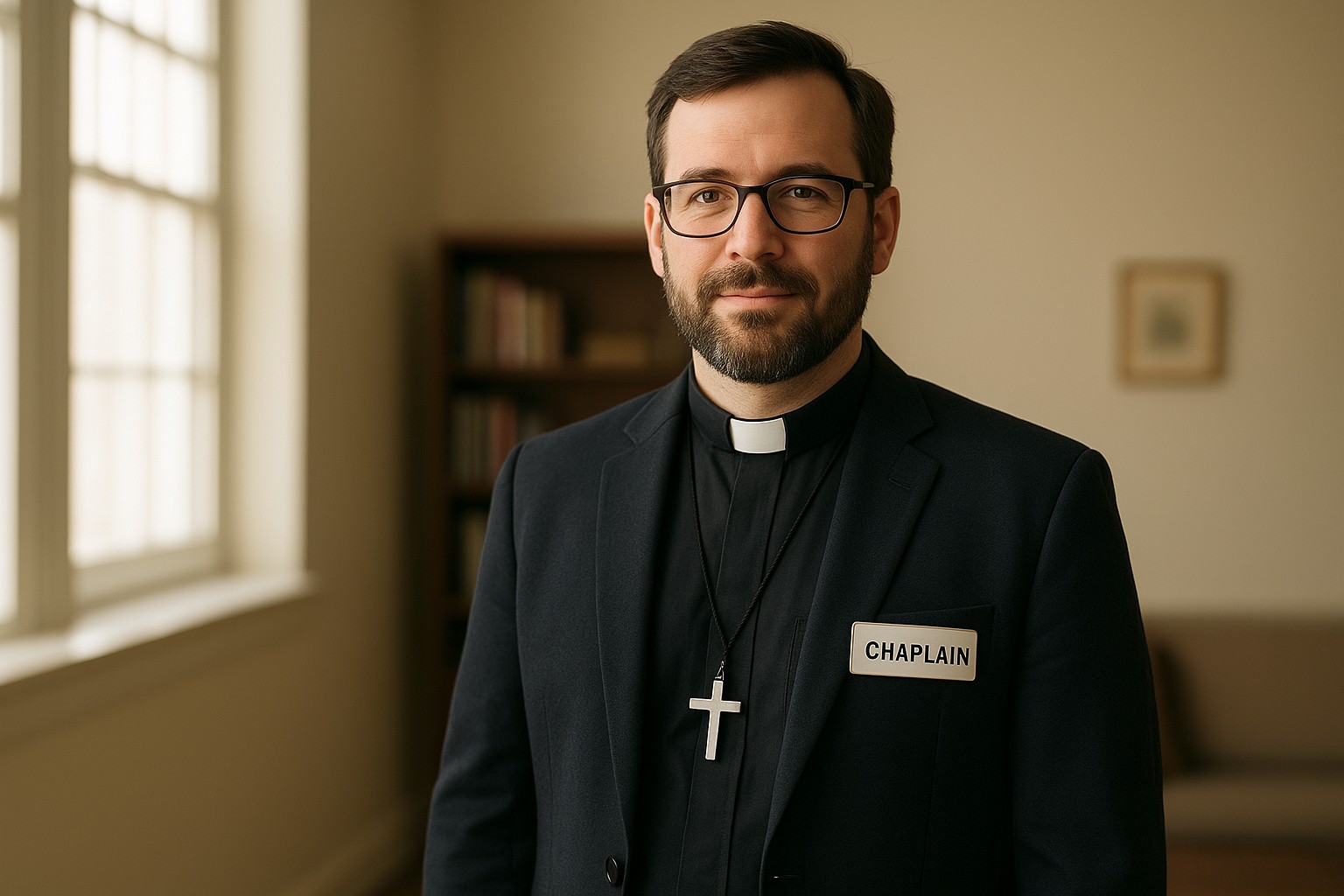
You might be asking how to become a chaplain in Australia because you want a meaningful career supporting people in schools, hospitals, prisons, the military or remote communities. This guide walks you through what chaplains do, the core skills you’ll need, sector-by-sector routes, realistic salary expectations, training courses available across Australia and where to find chaplaincy vacancies.
What is a Chaplain?
A Chaplain is a spiritual care professional who provides interfaith or non-denominational support to individuals within specific institutional settings— for example, in schools, hospitals, prisons, defence units and remote workplaces. Chaplains aren’t only for one faith tradition; increasingly chaplaincy in Australia is plural and professional, offering support to people regardless of belief. As a chaplain, you’ll listen, respond to crisis, run wellbeing programs and liaise with staff, families and community organisations.
Core Skills and Responsibilities of Chaplains
Core skills for chaplaincy include active listening, crisis intervention, confidentiality, cultural competence—especially regarding First Nations communities—teamwork, and basic counselling abilities. Chaplains provide essential support by being a reliable presence for those in need of confidential conversation, ethical guidance, or companionship during difficult moments. Their responsibilities often vary by setting but typically encompass pastoral visits, referrals to specialist services, spiritual support, conducting memorial services, and coordinating volunteers. In many cases, chaplains serve as bridges between various systems, such as translating clinical language for families in hospitals, supporting teachers with students’ mental health concerns, or connecting prisoners to community services upon release. Daily tasks may involve informal conversations, structured counselling sessions, group reflections or prayers, leading memorials, and keeping simple records. Additionally, chaplains must understand legal and ethical obligations, maintain confidentiality-compliant documentation, and make appropriate referrals to mental health professionals. Cultural competence is also essential, requiring respect for local community protocols and adaptations of pastoral approaches for diverse backgrounds. Many employers look for skills in mental health first aid, trauma-informed care, and basic suicide response.
Working Environment
Chaplains work in diverse environments: classrooms and staff rooms, hospital wards and palliative care units, prison yards and chapels, military bases and fly-in/fly-out (FIFO) workplaces. Shifts can be regular business hours, rostered on-call, or seasonal (school term time). Many roles are part-time or contracted; some are full-time salaried positions. Your working environment will shape the practical realities of the job. In schools you may operate according to term timetables, attend student welfare meetings, and run lunchtime groups; in hospitals you are likely to be part of a 24/7 care culture with on-call expectations for emergencies and end-of-life support. In prisons you’ll work under strict security protocols and need resilience for confronting challenging behaviours. Remote and FIFO chaplaincy frequently involves rotational living, extended travel and the need to establish rapid rapport with transient populations. Team structures vary: some chaplains are embedded within dedicated pastoral teams, others are the sole chaplain working across large geographic areas — which affects access to supervision and peer support.
Median Salary
Salary ranges for chaplains in Australia differ by sector and seniority. Broad market figures in 2025 show averages between approximately AU$60,000 and AU$105,000, with variations by location and employer type. Many chaplain roles are offered part-time or as contracts, so advertised salaries may be quoted as hourly rates or pro-rata amounts — which means your take-home pay depends heavily on hours worked. Remote or regional posts sometimes include allowances or higher total packages to compensate for travel and living costs. Volunteer chaplaincy remains common in some sectors, offering experience rather than pay.
Chaplain Dress Code
Chaplains generally follow the dress expectations of their workplace, aiming to appear approachable, professional and culturally respectful. In many settings—such as schools, hospitals and community organisations—this means neat, modest business-casual clothing with an ID badge clearly visible. Some employers provide branded shirts or uniforms to help staff and service users easily identify the chaplain. In environments with specific safety or operational requirements, such as prisons, defence units or industrial sites, chaplains may need to wear PPE (e.g., closed-in footwear, high-vis vests, or protective clothing) and adhere to strict security guidelines. Faith-specific attire is usually optional and should be worn only where appropriate to the context and permitted by policy. Regardless of the setting, the guiding principle is to maintain a respectful presence that supports trust, safety and professionalism.
Chaplain Jobs in Different Sectors
Chaplain Jobs in Schools
School chaplains provide vital pastoral care for both students and staff, offering guidance, emotional support, and spiritual counselling. Their responsibilities often include running wellbeing workshops, mentoring programs, and supporting families experiencing crises or trauma. Chaplains may also liaise with community organisations to provide additional support services such as counselling, tutoring, or financial aid referrals. Many school chaplain roles are part-time and funded through school budgets, community grants, or denominational bodies. These positions often require a certificate or diploma in pastoral care, chaplaincy, or a related field. Candidates must hold a clear Working with Children Check and demonstrate experience engaging with young people in pastoral or educational settings. In Australia, job boards such as SEEK frequently list school chaplain positions. As of 2025, part-time roles typically offer hourly rates ranging from AU$35 to AU$45. Benefits may include professional development opportunities, networking with other chaplains, and the satisfaction of positively influencing student wellbeing.
How Do You Become a Hospital Chaplain
Hospital chaplains provide spiritual and emotional support to patients, families, and hospital staff, often in high-stress and sensitive situations. They assist patients in coping with illness, grief, and end-of-life decisions, and provide crisis intervention during medical emergencies. Hospital chaplains work closely with multidisciplinary healthcare teams, including doctors, nurses, social workers, and psychologists. To pursue a career in hospital chaplaincy, candidates typically need a degree or diploma in theology, pastoral care, social work, or a related field. Most hospitals in Australia require at least one unit of Clinical Pastoral Education (CPE) and often prefer applicants with full CPE certificates. Practical experience in healthcare or pastoral care settings is highly valued. Clinical Pastoral Education programs, which combine supervised patient visits with reflective learning, are available through major hospitals and community health services. Hospital chaplaincy offers a challenging but rewarding career for those who are compassionate, resilient, and capable of working in emotionally intense environments.
Prison Chaplain Jobs
Prison chaplains provide spiritual guidance, emotional support, and moral mentoring to inmates. They often run educational programs, facilitate rehabilitation initiatives, and assist in conflict resolution. Chaplains also support correctional staff by providing counselling and crisis intervention services. These roles require a high level of emotional resilience, strong ethical boundaries, and an understanding of correctional systems. Employers generally look for candidates with pastoral care qualifications, experience working with disadvantaged or vulnerable populations, and the ability to pass rigorous security clearances. Strong interpersonal skills, patience, and cultural sensitivity are essential, especially when working with diverse inmate populations.
Military Chaplain Jobs
Military chaplains in the Australian Defence Force (ADF) provide spiritual care, ethical guidance, and pastoral support to service members and their families. Their duties often include conducting religious services, offering confidential counselling, advising on moral and ethical issues, and participating in ceremonial events. Military chaplains may be deployed in active service or peacekeeping operations. To become an ADF chaplain, candidates must meet both religious endorsement requirements from a recognised faith body and the ADF entry standards. Pathways typically include obtaining theological qualifications and specialised military training. Candidates must also pass extensive security checks and meet physical fitness standards, depending on the role. These positions offer a unique blend of pastoral care and leadership responsibilities in a structured and disciplined environment.
Remote Chaplain Jobs
Remote chaplaincy positions, which include roles in rural communities, fly-in/fly-out sites, or maritime settings, offer unique opportunities and challenges. Chaplains in these roles often perform multiple functions, such as counselling, community engagement, and crisis management. Working in remote areas requires strong cultural competency, especially when serving First Nations communities or multicultural populations. Remote chaplains may face logistical challenges such as extended travel, rotational rosters, and limited access to supervision and support networks. Salaries may include remote allowances, and roles often provide opportunities for professional growth and leadership in isolated settings. Successful remote chaplains combine adaptability, resilience, and a strong sense of mission to provide meaningful support to communities with limited resources.
Chaplaincy Vacancies: How to Find Open Positions
To find chaplaincy vacancies, check these places regularly:
- Job boards: SEEK, Jora, Indeed and LinkedIn — many school and prison chaplain jobs are listed here.
- Denominational/faith networks: Churches and faith organisations often advertise chaplaincy posts directly.
- Hospital and health service websites: major hospitals list CPE and chaplain positions on their careers pages.
- Chaplaincy training providers: organisations like Chaplaincy Australia or Chaplaincy training partnerships list opportunities and internships.

How to Become a Chaplain in Australia: Step by Step Guide
Becoming a chaplain in Australia is a structured yet adaptable pathway. While requirements vary depending on whether you pursue chaplaincy in schools, hospitals, prisons, the ADF, or remote workplaces, the core of the journey always centres on pastoral formation, accredited training, practical experience, and spiritual maturity. Below is a clear, step-by-step guide tailored to the Australian context, now incorporating essential skills, qualifications, and recognised professional standards across the industry.
Step 1: Understand the Role and Required Capabilities
Before you start training, take time to understand what chaplains actually do across Australian settings. Each environment—schools, correctional centres, hospitals, corporate teams, defence units or mining sites—requires a slightly different skill profile, but all chaplains share foundational competencies. Core competencies expected in Australia include:
- Active listening and non-judgemental presence
- Interfaith competence and the ability to support people of any belief or none
- Crisis intervention and de-escalation
- Cultural humility, including First Nations awareness and respect
- Pastoral counselling and emotional support
- Ethical discernment and a strong sense of professional boundaries
- Emotional resilience for high-stress and crisis environments
- Documentation and confidentiality in line with Australian practice standards
These expectations form the foundation for future study and professional readiness. The skill landscape in Australia is also shifting: chaplains today must be comfortable with pluralistic care, spiritual assessment and working across interdisciplinary teams such as educators, clinicians, psychologists, social workers and welfare staff.
Step 2: Complete the Required Academic Qualifications
Most chaplaincy pathways in Australia expect you to hold a tertiary qualification in theology, pastoral care, counselling, or ministry. The most recognised benchmark is equivalent to what US board certifications expect, though adapted to Australian frameworks. Common Australian education pathways include:
- A Bachelor degree in Theology, Ministry, Counselling, Psychology or Religious Studies as a foundation
- A Master of Divinity (M.Div.) or an equivalent ministry/theology degree for advanced chaplaincy roles
- Specialised courses in pastoral care, grief and bereavement, trauma response and end-of-life care
Healthcare, defence and correctional chaplaincy roles typically prefer postgraduate qualifications or a mix of relevant degrees plus substantial professional experience.
Step 3: Complete Clinical Pastoral Education (CPE)
In Australia, Clinical Pastoral Education (CPE) is essential for anyone wanting to work professionally in hospitals, aged care, public health settings, mental health units or prisons. CPE develops your ability to conduct spiritual assessments, engage in reflective practice, and provide high-quality pastoral support in complex, emotionally intense environments. Typical Australian CPE requirements:
- Completion of 1–4 units of CPE from an ACPE-accredited centre
- Participation in supervised placements, reflective learning groups and clinical case reviews
- A residency or extended internship for those pursuing hospital chaplaincy
CPE is where aspiring chaplains strengthen technical skills such as crisis intervention, spiritual assessment, documentation, ethical decision-making and interdisciplinary teamwork.
Step 4: Gain Practical Experience
Most employers in Australia want to see hands-on chaplaincy experience. You can build this through internships, supervised ministry placements, community volunteering, or participation in denominational chaplaincy programs. Practical exposure helps you refine pastoral style, improve conflict resolution, and develop a non-anxious presence. For school chaplaincy, experience with youth work or wellbeing programs is especially valuable. For prison or defence chaplaincy, experience in structured, high-security or high-stress environments is a strong advantage.
Step 5: Obtain Professional Certification (Optional but Recommended)
Australia does not mandate national board certification, but employers—especially hospitals, aged care groups and government agencies—highly value professional standards. While US organisations like APC, NACC and NAJC define international benchmarks, Australian chaplains more commonly seek recognition from:
- Spiritual Care Australia (SCA)
- Professional Supervision organisations for ongoing reflective practice
- Denominational accreditation for faith-specific chaplaincy roles
Certification signals that you meet rigorous competency, ethical and clinical standards. It is particularly beneficial if you plan to specialise in healthcare, mental health, or aged care chaplaincy.
Step 6: Build the Complete Skills Portfolio
Employers across Australia look for a balanced mix of technical and soft skills, ensuring that chaplains can respond effectively in diverse, multicultural and often high-stakes environments. Key technical skills include:
- Spiritual Assessment & Care Planning
- Crisis Intervention & De-escalation
- Grief & Bereavement Support
- Ritual, Liturgy & Ceremony Facilitation
- Accurate Documentation & Record Keeping
- Resource Navigation & Referral to Australian community services
Soft skills commonly expected in Australia:
- Empathy and Compassion
- Active Listening
- Interfaith Competence and Inclusivity
- Emotional Resilience
- Ethical Discernment
- Adaptability and Flexibility
- Non-Anxious Presence
- Cultural Humility, including genuine respect for Aboriginal and Torres Strait Islander cultures
Step 7: Apply for Chaplaincy Positions
Once you’ve completed the necessary education, CPE units, practical training and skill development, you’re ready to apply. Australian chaplaincy roles are advertised through:
- State-based employers (schools, corrections, health networks)
- NGOs such as Scripture Union Australia, Red Cross, or workplace chaplaincy providers
- ADF Chaplaincy Branch
- Hospital and health district job boards
- Mining and FIFO industry wellbeing providers
Most applications require a resume, proof of qualifications, Working with Children Check, national police clearance, and sometimes denominational endorsement or CPE transcripts. At interview stage, you’ll often be asked to demonstrate reflective practice, ethical reasoning and your approach to multi-faith care.
Career Prospects for Chaplains in Australia
Career prospects for chaplains in Australia are shaped by sector demand, professional qualifications, and the increasing recognition of spiritual care as an essential component of wellbeing. Chaplains can progress through roles that deepen their direct spiritual care expertise or move into leadership pathways that oversee programs, departments, or specialist teams. Growth opportunities are strongest in education, health, corrections, community services, and the Australian Defence Force (ADF), where chaplaincy services are well established and increasingly integrated into multidisciplinary wellbeing models. Pay differs by sector, employer size, qualifications, and experience. The tables below summarise 2025 market trends based on job boards, salary surveys, and sector reports.
| Sector | Typical Salary Range (AUD) | Common Employment Type | Source |
|---|---|---|---|
| Schools (part-time & full-time) | AU$40,000 – AU$110,000 (pro-rata & FTE variance) | Part-time, fixed term, permanent | SEEK / School listings. |
| Hospitals & Health Services | AU$60,000 – AU$105,000 | Full-time, salaried | CPE providers & hospital career pages. |
| Prisons / Corrections | AU$55,000 – AU$95,000 | Permanent & contracted | Government & job boards. |
Average Salary by Sector (Schools, Hospitals, Prisons, Military)
Across sectors, a mid-career chaplain in 2025 can reasonably expect a salary between AU$70,000 and AU$90,000, depending on qualifications, sector, and hours. Specialist senior positions, program coordinators, and chaplaincy managers often exceed AU$100,000, particularly in major health networks, corrections, or the ADF. These roles increasingly involve interdisciplinary leadership, supervision of junior chaplains, and contribution to organisational wellbeing strategies.
| Factor | How it affects pay | Action you can take |
|---|---|---|
| Sector (school, health, corrections, ADF) | Different pay scales, allowances and entitlements | Target sectors with higher FTE rates or managerial roles |
| Qualifications & CPE | Higher qualifications generally lift starting pay | Complete diplomas and CPE units to negotiate pay |
| Location & remote loading | Remote/region roles may include allowances | Consider regional posts if you want higher total package |
Factors Affecting Chaplain Salary
Salary variation is influenced by formal qualifications, the number of completed CPE units, employer type (government, non-profit, private), and geographic location. Full-time positions in health and corrections tend to offer the most predictable income, while school chaplaincy often involves part-time or term-based contracts. Leadership roles—including chaplaincy coordinators, team leads, and managers—typically attract higher pay and may include additional benefits such as professional development budgets or supervisory allowances.
Career Growth and Advancement Opportunities
Chaplains in Australia can advance along multiple pathways. Progression may involve taking on more complex spiritual care cases, supervising junior chaplains, coordinating programs, or moving into organisational leadership. Many chaplains diversify into specialist domains such as trauma-informed care, bereavement support, youth work, or mental health. Completing advanced CPE units, graduate diplomas or a master’s degree in spiritual care, counselling, or theology significantly enhances eligibility for senior roles. Professional growth is also supported by joining chaplaincy associations, seeking mentorship from experienced practitioners, and contributing to multidisciplinary wellbeing initiatives. With time and experience, chaplains may move into roles such as Senior Chaplain, Lead Chaplain, Head Chaplain, or Clinical Pastoral Educator—positions that combine clinical expertise with leadership, program development, and strategic planning. Average Salary by Sector (Schools, Hospitals, Prisons, Military) Condensing national datasets, a reasonable expectation in 2025 for a mid-career chaplain is roughly AU$70,000–AU$90,000 depending on sector and hours. Specialist senior positions or chaplaincy managers can exceed AU$100,000.
| Factor | How it affects pay | Action you can take |
|---|---|---|
| Sector (school, health, corrections, ADF) | Different pay scales, allowances and entitlements | Target sectors with higher FTE rates or managerial roles |
| Qualifications & CPE | Higher qualifications generally lift starting pay | Complete diplomas and CPE units to negotiate pay |
| Location & remote loading | Remote/region roles may include allowances | Consider regional posts if you want higher total package |
Factors Affecting Chaplain Salary
Key factors include your formal qualifications, CPE completion, employer type (non-profit, private, government), geographic location and whether the role is full time or part time. Leadership roles, chaplaincy coordinators and roles with management responsibility attract higher pay.
Career Growth and Advancement Opportunities
Career pathways include senior chaplaincy roles, chaplaincy coordinators, clinical pastoral educators, or leadership in faith-based organisations. You can diversify by developing specialist skills (trauma-informed care, bereavement counselling, youth work) and by completing higher study (graduate diplomas, masters) that position you for senior roles.
Chaplain Training Courses
Your training choices shape employability. Below are common, recognised options available across Australia in 2025.
| Course | Level / Length | Typical Provider Type | Source |
|---|---|---|---|
| Certificate IV in Chaplaincy & Pastoral Care (CHC) | Short certificate (months) | Registered training organisations / Chaplaincy partners | Chaplaincy Australia. |
| Diploma of Chaplaincy | Diploma (6–12 months) | Private colleges, religious colleges | Chaplaincy Australia. |
| Clinical Pastoral Education (CPE) | Intensive units (weeks to months) | Hospital CPE centres | Major hospitals & CPE centres. |
Recommended Chaplaincy Training Courses in Australia
Nationally recognised packages (Certificate IV, Diploma) are widely offered and recommended for school chaplaincy; hospital chaplaincy strongly recommends CPE. Organisations such as Chaplaincy Australia have formal partnerships with colleges to provide accredited pathways.
Online and In-Person Programs
Both online and in-person programs exist. Use in-person CPE for clinical learning; diplomas are often available in blended formats so you can combine work and study.
Continuing Professional Development for Chaplains
CPD can include short courses in trauma informed practice, bereavement counselling, First Nations cultural safety training and supervision groups. Keeping a CPD log and supervised practice hours strengthens applications for senior roles.
Frequently Asked Questions
1. How long does it take to become a chaplain in Australia?
It depends on the route. A basic Certificate IV and volunteer experience can get you into part-time school chaplaincy within months. For hospital chaplaincy, employers commonly expect Clinical Pastoral Education plus a diploma or degree — plan for 1–2 years of study and supervised placement before applying for many salaried hospital roles. (All timeframes here refer to pathways recognised in 2025.)
2. Can you become a chaplain without a theological degree?
Yes. Many chaplains enter via diplomas, Certificate IV in Chaplaincy, or related qualifications (counselling, social work) combined with CPE and supervised experience. Theological degrees help for some faith-endorsed roles, but practical pastoral training and CPE are often more important in sector roles.
3. What is the difference between hospital, school and military chaplain jobs?
Hospital chaplains focus on clinical pastoral care, crisis and end-of-life support and usually require CPE. School chaplains concentrate on student wellbeing, pastoral programs and family support; roles can be part-time. Military chaplains require religious endorsement and meet ADF standards, with duties including pastoral care, ethics support and ceremonial functions.
4. Are remote chaplain jobs common in Australia?
Remote chaplain positions exist but are fewer than urban roles; they often appear in regional healthcare, FIFO sites and community organisations. These jobs may include remote allowances and require cultural competency for community-based work.
5. How much does a chaplain earn on average in Australia?
In 2025, national averages reported by salary aggregators and job boards place chaplain salaries commonly between AU$60,000 and AU$90,000, with mid-range medians around AU$80,000. Hourly rates for part-time school chaplains often range AU$35–AU$45. Exact pay varies by sector, hours and qualifications.
References
Australian Charis College. (n.d.). Certificate IV in Chaplaincy and Pastoral Care (CHC42315). Retrieved from Australian Charis College website. Australian Charis College
Australian Defence Force (ADF) Careers. (n.d.). Chaplain – Army. Retrieved from ADF Careers website. adfcareers.gov.au
Defence Force Remuneration Tribunal. (2025). Determination No. 2 of 2017, Salaries – Specialist officer salary rates: Chaplain. Compilation date 5 June 2025. pay-conditions.defence.gov.au
Malyon Vocational Training. (n.d.). Become a Chaplain. Retrieved from Malyon Vocational Training website. Malyon Vocational Training
National Training Solutions. (n.d.). Certificate IV in Chaplaincy & Pastoral Care (CHC42315). Retrieved from NTSN website. ntsn.edu.au
Alphacrucis University College. (n.d.). Diploma of Chaplaincy. Retrieved from Alphacrucis University College website. ac.edu.au
Pilgrim Bible College (PBC). (2024). Contemporary Chaplaincy Program (CCP) Information. Retrieved from PBC website. pbc.wa.edu.au

Hi, I’m Natalia, a passionate education advisor committed to helping students pursue their dreams through international study. Growing up in a small town and later attending a prestigious university, I’ve seen firsthand how transformative education can be. I created this platform to support families and students on their journey to studying in Australia, offering practical guidance, strategic planning, and inspiration. My mission is simple: to make quality education accessible, joyful, and empowering for every learner.